

Free guide for Hamilton home buyers
Protect your mortgage approval
14 things to avoid before closing
Your offer is accepted, or your mortgage application is in. Now what? A practical guide to keeping your financing on track, from mortgage application to closing day.
Download the Free GuideFree. No email required. No contact information required.

Why this guide matters
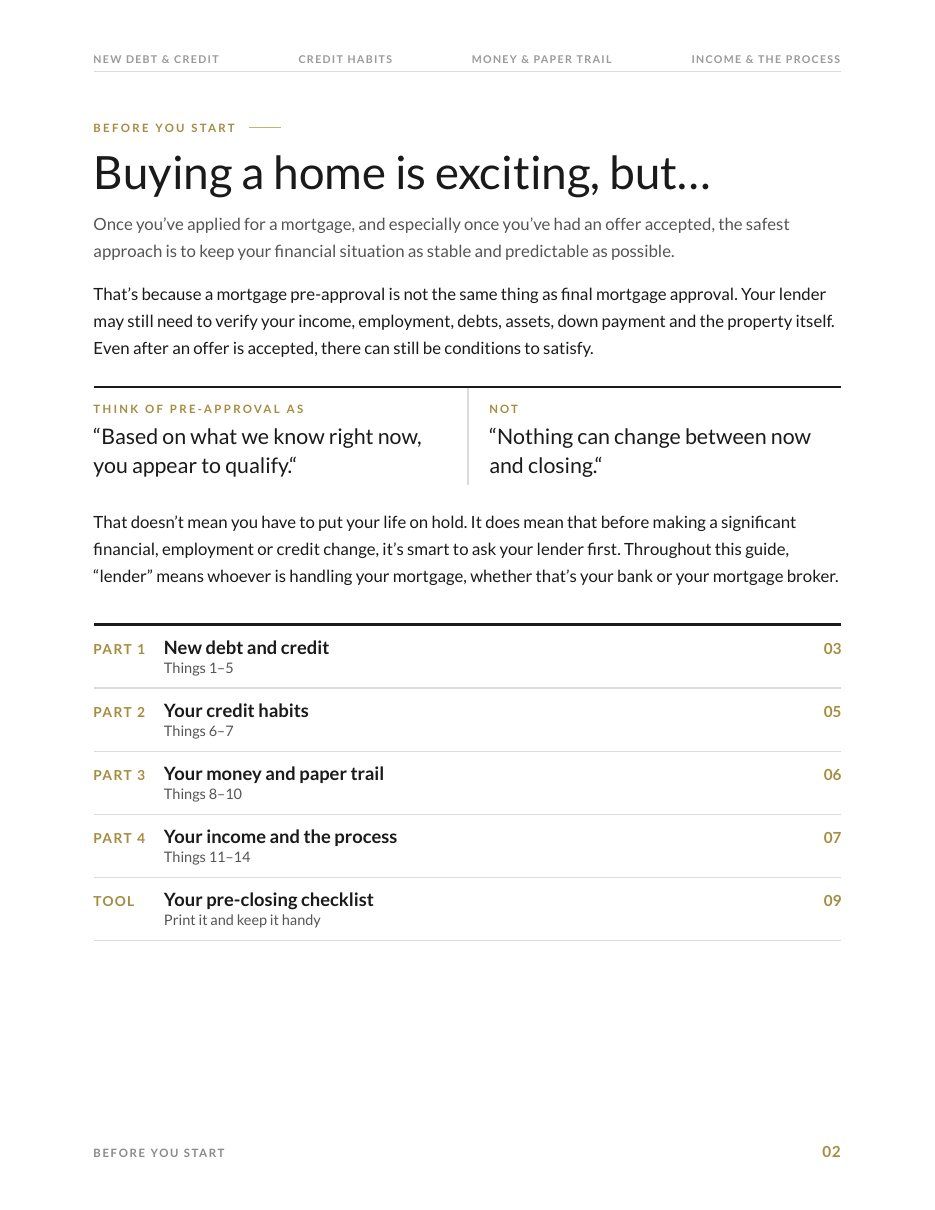
Pre-approval isn’t final approval
Your lender may still need to verify your income, employment, debts, assets, down payment and the property itself, even after your offer is accepted. You don’t have to put your life on hold. But before a significant financial, employment or credit change, it’s smart to ask your lender first.
Think of pre-approval as
“Based on what we know right now, you appear to qualify.”
Not
“Nothing can change between now and closing.”
What’s inside
14 things to avoid, in four parts
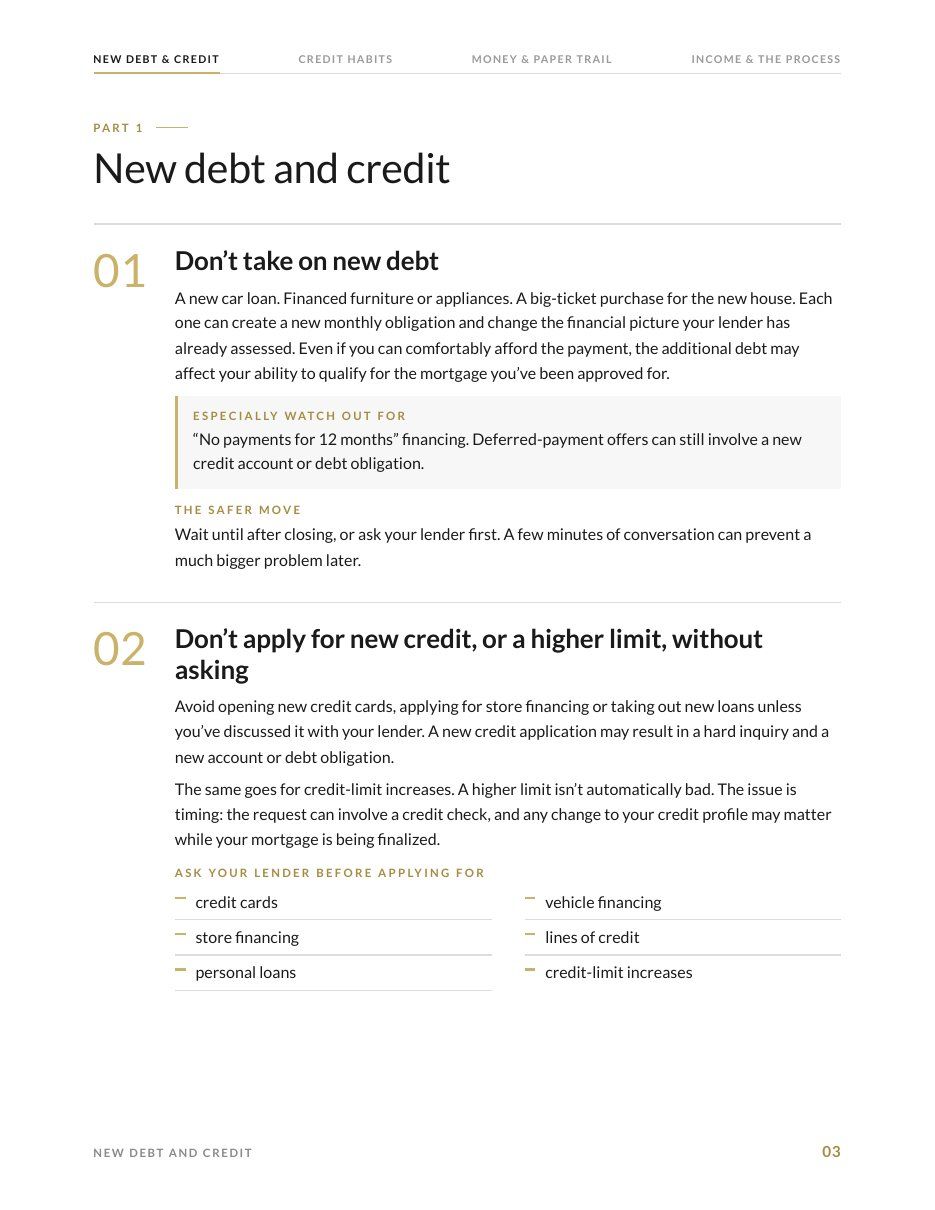
New debt and credit
- Don’t take on new debtA new car loan or financed purchase can change the picture your lender has already assessed.
- Don’t apply for new credit, or a higher limit, without askingEven a credit-limit increase can involve a credit check.
- Don’t close existing credit accounts without understanding the impactClosing a card can affect your available credit and your credit history.
- Don’t co-sign for someone elseIt may feel like a simple favour. It isn’t; you can become responsible for the debt.
- Don’t consolidate or restructure debt without asking firstIt can be a reasonable strategy. The timing is what matters.
Your credit habits
- Don’t let your credit-card balances climbRunning cards near their limits can change your financial picture, even if you pay them off soon after.
- Don’t miss or make late paymentsYour mortgage application doesn’t put your other bills on pause.
Your money and paper trail
- Don’t spend the money you’ve set aside for closingClosing costs go well beyond the down payment.
- Don’t move money without a paper trailThe issue isn’t having money. It’s not being able to explain where it came from.
- Don’t leave RRSP or FHSA withdrawals to the last minuteThey come with eligibility rules, paperwork and processing time.
Your income and the process
- Don’t make a major employment or income change without talking to your lenderDon’t assume a job change is harmless. Don’t assume it’s fatal either.
- Don’t leave anything out of your applicationYour lender verifies what you tell them. Complete transparency is simplest.
- Don’t leave home insurance until the last minuteYour lender will typically need proof of insurance before your mortgage funds.
- Don’t ignore your lender’s requestsA request usually just means normal verification. Reply promptly.
Take a look inside
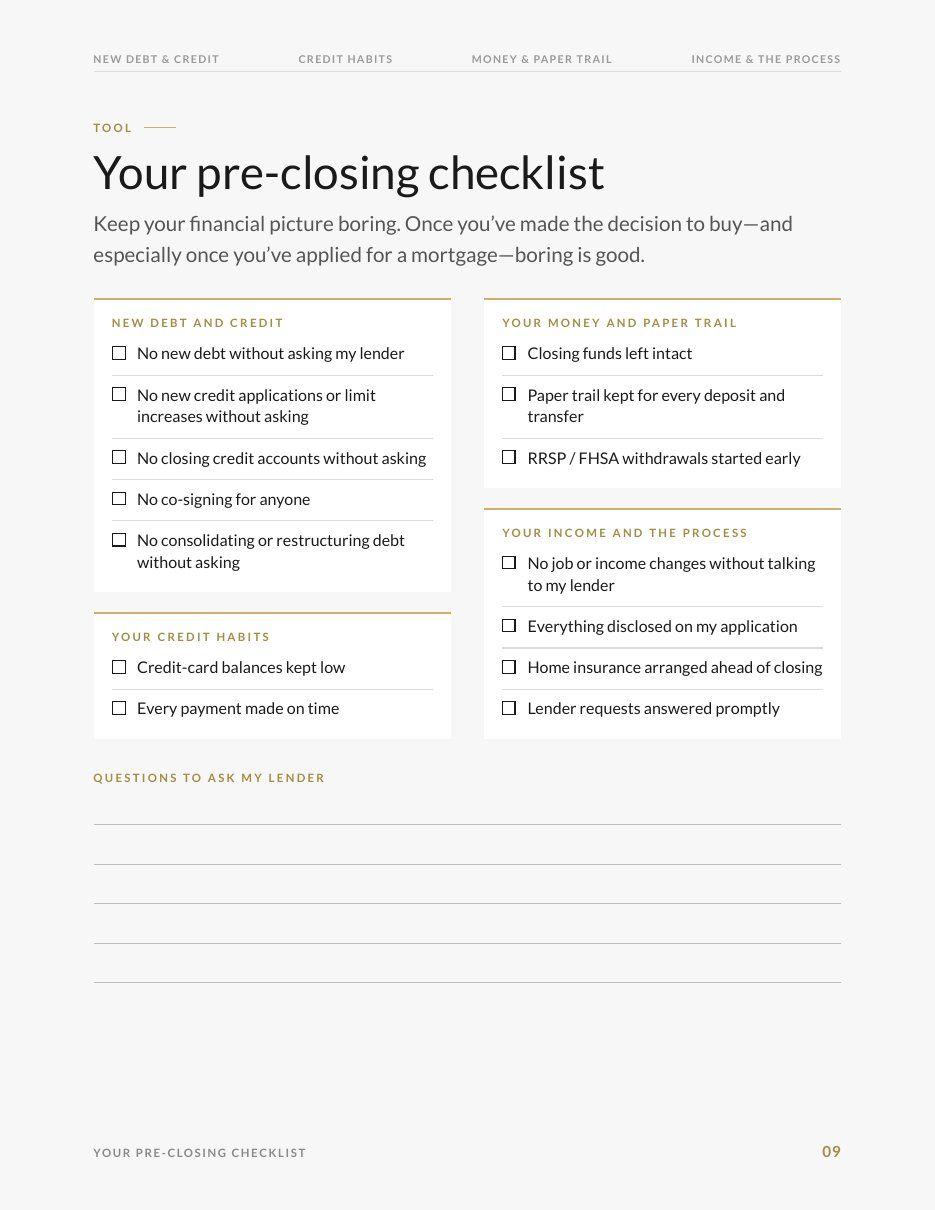
Practical, printable and easy to follow
Buying in Hamilton
Two things that are different here
One land transfer tax, not two
Hamilton buyers pay only the Ontario land transfer tax, not the additional municipal tax Toronto buyers pay. First-time buyers may qualify for a refund of up to $4,000, usually applied by your lawyer at closing.
Older homes can take longer to insure
Many Hamilton homes, especially in the Lower City, were built a century or more ago. Features like knob-and-tube wiring or an old oil tank can limit coverage or take longer to insure, so start getting quotes early.
Ready to take a closer look?
Download the guide, print the checklist, and keep your financial picture boring until closing day. Boring is good.
Download the GuideFree. No email required. No registration. No sales pitch.
If you’re not sure, ask
If you’re not sure whether something matters, ask your lender or ask me. I’d much rather get a quick question before you make a change than a worried call after. If I don’t know the answer, I’ll point you to someone who does.
Mike McCarthy, REALTOR® · Real Broker Ontario Ltd.
Keep exploring